For Pakistanis and people of Pakistani origin living in the United Kingdom, keeping the correct identity documents up to date can make travel, family matters and official processes much easier. However, understanding the difference between documents such as NICOP, POC, FRC and a Pakistani passport can sometimes be confusing.
Each document serves a different purpose. A Pakistani citizen living overseas may need a NICOP, while a foreign national with Pakistani roots may qualify for a Pakistan Origin Card (POC). An FRC, meanwhile, records family composition rather than functioning as an identity card or travel document.
This guide explains the main Pakistani identity and registration documents UK residents may encounter, what they are used for, and how to determine which service is relevant to their circumstances.
What Are the Main Pakistani Identity Documents for UK Residents?
The document you need depends on factors such as your citizenship, family background and the reason you require documentation.
Some of the main documents and services relevant to Pakistanis living in the UK include:
- National Identity Card for Overseas Pakistanis (NICOP)
- Pakistan Origin Card (POC)
- Family Registration Certificate (FRC)
- Pakistani Machine Readable Passport (MRP)
Although these documents are connected with Pakistani identity or family records, they are not interchangeable.
Understanding the purpose of each one before starting an application can help you choose the correct service and prepare the appropriate supporting documents.
NICOP – National Identity Card for Overseas Pakistanis
The National Identity Card for Overseas Pakistanis (NICOP) is an identity document issued by Pakistan’s National Database and Registration Authority (NADRA) to eligible Pakistani citizens residing overseas.
For many Pakistani citizens living in the UK, NICOP is one of their most important Pakistani identity documents.
A NICOP can be relevant for purposes including:
- Establishing Pakistani identity and citizenship
- Travelling to Pakistan, subject to applicable rules and eligibility
- Identity verification for certain matters in Pakistan
- Property and inheritance-related procedures
- Banking and other official transactions
- Maintaining an overseas Pakistani identity record
People often refer to NICOP informally as a NADRA Card, particularly within Pakistani communities in the UK.
When Might You Need a New NICOP?
A new NICOP application may be relevant if you are eligible for NICOP but have not previously been issued one.
The documents required can vary according to the applicant’s circumstances. Applications involving children, changes in family records or other specific circumstances may require additional supporting evidence.
If you’re applying for the first time, see our New NICOP guide for information specifically about new applications.
What If Your NICOP Is Expiring?
An existing NICOP may need to be renewed when it approaches its expiry date.
Renewal is different from applying for a completely new card, so applicants should use the appropriate application category.
Our NICOP Renewal UK guide covers renewal requirements separately.
What If Your NICOP Has Been Lost?
If you previously held a NICOP but can no longer locate it, you should look at the appropriate replacement process rather than starting an unrelated new-card application.
You can read our Lost NICOP guide for more information about replacing a lost card.
Pakistan Origin Card (POC)
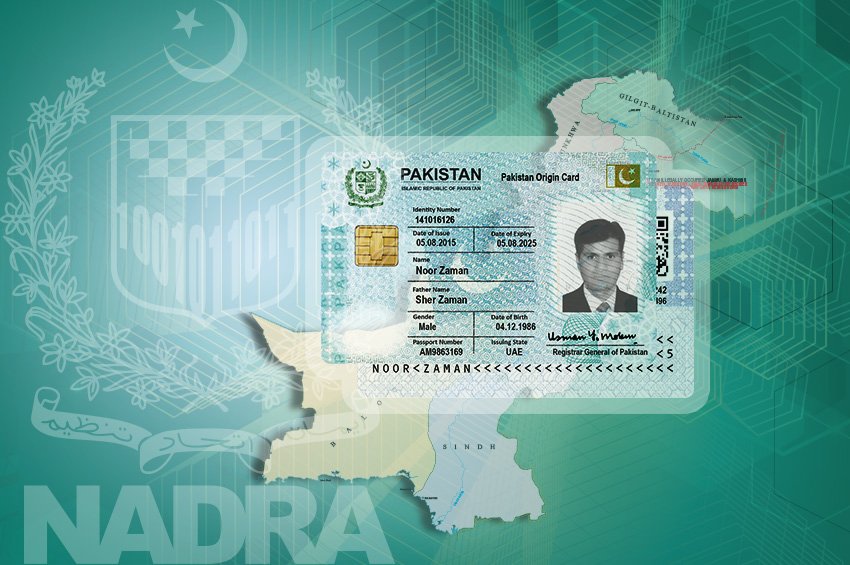
The Pakistan Origin Card (POC) is different from NICOP.
While NICOP is associated with eligible Pakistani citizens living overseas, POC is designed for eligible foreign nationals with Pakistani origin or qualifying connections to Pakistan.
This distinction is important because people sometimes use the terms NICOP and POC as though they refer to the same document.
They do not.
Depending on eligibility and applicable rules, a POC can provide benefits connected with entry, stay and certain activities in Pakistan.
If you believe you may qualify based on Pakistani origin or family connections, check the eligibility requirements carefully before applying.
Applicants can find more information on our New POC Card page.
Existing POC holders can also access separate services when their card needs to be renewed, replaced or cancelled.
NICOP vs POC – What’s the Difference?
NICOP and POC may look similar from an applicant’s perspective because both are associated with NADRA and overseas applicants. However, their eligibility and purpose are different.
In simple terms:
NICOP
Primarily relates to eligible Pakistani citizens residing overseas.
POC
Primarily relates to eligible foreign nationals of Pakistani origin or those who qualify through specified connections to Pakistan.
Therefore, you shouldn’t choose between NICOP and POC simply based on which card appears more convenient.
Your citizenship and eligibility determine which document is appropriate.
If you’re uncertain about the correct category, establish your eligibility before submitting an application.
Family Registration Certificate (FRC)
A Family Registration Certificate (FRC) provides information about a person’s recorded family composition according to NADRA’s records.
Unlike NICOP or POC, an FRC should not be thought of as another type of identity card.
Its purpose is to show registered family relationships.
Depending on the applicant’s circumstances, FRC information may be presented through categories such as:
By Birth – family composition based on parent and sibling relationships.
By Marriage – family composition relating to a spouse and children.
By Adoption – family information relating to the relevant registered family relationship.
FRCs may be requested for various administrative, immigration, family or documentation purposes, depending on the organisation requesting evidence.
If you require one, see our New FRC service information for further details.
Is an FRC the Same as a NICOP?
No.
This is an important distinction for UK residents researching Pakistani documentation.
A NICOP identifies an eligible overseas Pakistani citizen, whereas an FRC provides information about registered family composition.
Having one does not mean the other serves the same purpose.
For example, an organisation asking you to provide evidence of family relationships may specifically request an FRC. Providing an identity card instead may not satisfy that particular requirement.
Always check exactly which document the requesting organisation requires.
Pakistani Machine Readable Passport (MRP)
A Pakistani passport is another important document for Pakistani citizens living in the UK.
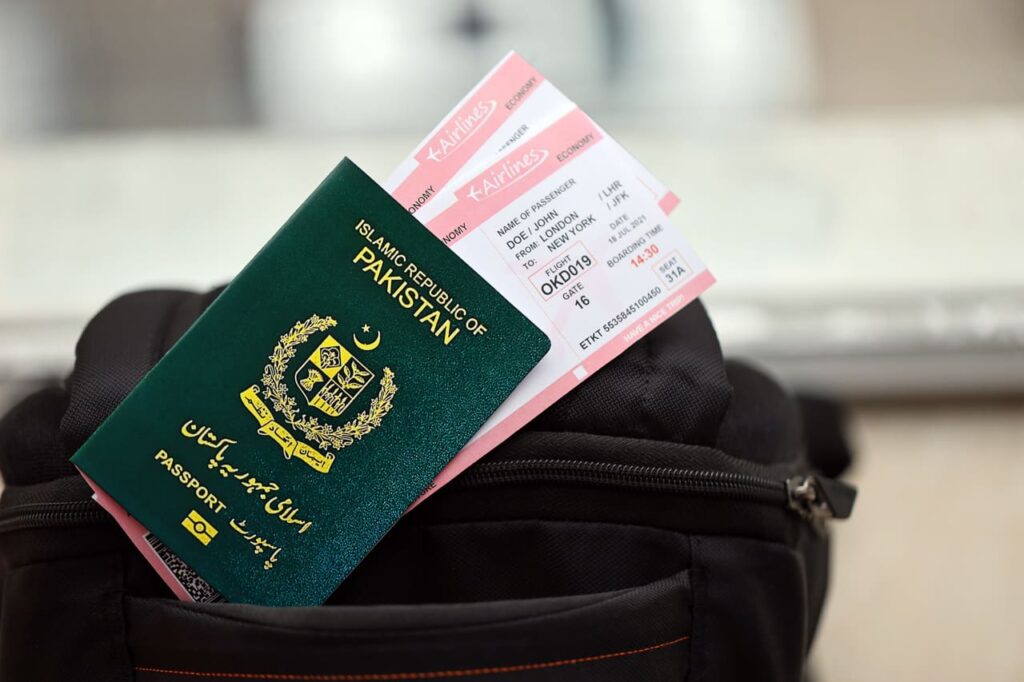
A Machine Readable Passport (MRP) is a travel document and should not be confused with a NICOP, POC or FRC.
Your passport primarily serves as an internationally recognised travel document and evidence of nationality, subject to applicable rules.
Pakistani citizens in the UK may need passport services when:
- Their passport is approaching expiry
- Their existing passport has expired
- They need to maintain valid documentation for international travel
- Their circumstances require a passport application or renewal
If your existing passport requires renewal, see our Pakistani MRP Renewal UK information for the relevant service.
NICOP, POC, FRC and Passport: Which One Do You Need?
A simple way to understand the documents is to consider what you’re trying to accomplish.
If you are an eligible Pakistani citizen living overseas: NICOP may be the relevant identity document.
If you are a foreign national with qualifying Pakistani origin or connections: POC may be relevant, subject to eligibility.
If you need evidence of your recorded family composition: You may require an FRC.
If you need a Pakistani international travel document: You may require a Pakistani passport.
Some people may legitimately hold or require more than one of these documents because they serve different purposes.
For example, holding a NICOP does not automatically eliminate the need for a valid passport when a passport is required for a particular journey or official procedure.
Can You Apply for Pakistani Identity Documents from the UK?
Many Pakistani document services can now be started or completed through online application systems, depending on the particular service and circumstances of the applicant.
This can make the process considerably more convenient for overseas applicants.
However, don’t assume that every application follows exactly the same procedure.
Depending on the service and individual case, applicants may need to provide:
- Personal information
- Existing Pakistani identity details
- Passport information
- Photographs
- Supporting family documents
- Evidence relating to changes in personal information
- Biometric information or verification where applicable
Additional evidence can also be requested depending on the application.
Applicants should therefore check the requirements for their specific application type rather than relying on a generic document checklist.
Documents Commonly Needed for NADRA-Related Applications
Requirements differ between NICOP, POC, FRC and other services, but preparing your records before beginning an application can save time.
Depending on the application, relevant documents or information might include:
- Existing NICOP, CNIC or other Pakistani identity information
- Pakistani or foreign passport
- Birth certificate
- Parents’ identity documents
- Marriage documentation
- Family information
- Current photograph
- Supporting evidence for requested modifications
- Address and contact information
Not every applicant will need every document listed above.
For example, the requirements for a child’s first NICOP can be different from those for an adult renewing an existing NICOP.
Use the checklist provided for the particular service you are applying for.
Pakistani Identity Documents for Children Born in the UK
Children born in the UK to Pakistani parents can have different documentation requirements depending on citizenship, registration and family circumstances.
Parents should avoid assuming that a UK birth certificate alone determines every aspect of the child’s Pakistani documentation.
If a child is eligible for NICOP, the application may involve information and documents relating to the child and their parents.
Because newborn applications have their own questions and requirements, we cover this subject separately in our NICOP for Newborn Babies in the UK guide.
This allows parents to review information specifically relevant to children without confusing it with adult renewal or replacement procedures.
What Happens When Your Personal Details Change?
Pakistani identity records should accurately reflect the information required for the relevant document.
If important details have changed or need correction, you may need a modification service rather than a standard renewal.
Depending on the circumstances, this could relate to information such as:
- Name
- Marital information
- Family details
- Other information recorded against the applicant
Supporting evidence may be required to substantiate a requested change.
If you need to update information on your NICOP, refer to our NADRA Card Modification UK page rather than submitting the wrong application category.
NADRA Services for Pakistanis Across the UK
Pakistani communities live throughout the United Kingdom, and applicants often search for NADRA or NICOP information using the name of their city.
The underlying document requirements are generally determined by the service and applicant’s circumstances rather than simply by the UK city in which they live.
However, we have prepared location-specific information to help applicants find relevant guidance for their area.
NADRA Card London
Pakistanis living in the capital can read our NADRA Card London guide for information about NICOP and related NADRA services for London applicants.
NADRA Card Birmingham
For applicants in Birmingham and surrounding areas, visit our NADRA Card Birmingham guide.
NADRA Card Manchester
If you live in Greater Manchester, our NADRA Card Manchester page provides locally focused information about available application assistance.
NADRA Card Bradford
Applicants from Bradford and nearby areas can find relevant information in our NADRA Card Bradford guide.
NADRA Card Liverpool
For Pakistani residents in Liverpool and Merseyside, see our NADRA Card Liverpool page.
NADRA Card Glasgow
Applicants based in Glasgow or elsewhere in Scotland can explore our NADRA Card Glasgow guide.
NADRA Card Southampton
For applicants on the South Coast, visit our NADRA Card Southampton page.
NADRA Card Nottingham
Pakistani residents in Nottingham and surrounding areas can see our NADRA Card Nottingham guide.
NADRA Card Luton
Applicants living in Luton can find locally relevant information through our NADRA Card Luton page.
NADRA Card Bristol
For applicants in Bristol and surrounding areas, see our NADRA Card Bristol guide.
These location guides complement our main service pages. If you’re researching a particular document, use the relevant NICOP, POC, FRC or MRP guide for detailed service-specific information.
How to Avoid Delays With Pakistani Document Applications
A significant amount of frustration can be avoided by preparing carefully before submitting an application.
Make sure that the information you enter matches your supporting documents. Check names, dates of birth, document numbers and other important details before submission.
Upload clear images or scans when documents are requested. Blurred, cropped or unreadable files can make verification more difficult.
Most importantly, select the correct application category.
For example, don’t select a new NICOP application simply because your previous card has expired. Similarly, a lost card, modification and cancellation each represent different circumstances.
If you’re unsure which category applies, clarify this before proceeding.
Keeping Your Pakistani Identity Documents Up to Date
Living overseas doesn’t remove the need to keep important Pakistani records organised.
It is sensible to periodically check the validity and accuracy of documents you rely upon, particularly before international travel or an important legal, financial or family procedure.
Check:
- Passport expiry dates
- NICOP validity
- Whether personal information is accurate
- Whether family information requires updating
- Whether you have access to the supporting documents you may need
Preparing well in advance is generally easier than discovering a documentation problem immediately before an important deadline or journey.
Frequently Asked Questions About Pakistani Identity Documents in the UK
What is the main Pakistani ID card for overseas Pakistanis?
For eligible Pakistani citizens living overseas, the National Identity Card for Overseas Pakistanis (NICOP) is an important Pakistani identity document. Eligibility should always be confirmed according to the applicant’s circumstances.
Is NICOP the same as a NADRA Card?
“NADRA Card” is commonly used as an informal term in the UK. NICOP is the specific name of the National Identity Card for Overseas Pakistanis. NADRA issues several types of documents, so the term “NADRA Card” can sometimes be ambiguous.
Is POC the same as NICOP?
No. NICOP and Pakistan Origin Card (POC) have different eligibility criteria. NICOP relates to eligible Pakistani citizens overseas, whereas POC is intended for qualifying foreign nationals with Pakistani origin or other eligible connections.
What is an FRC used for?
A Family Registration Certificate provides information about family composition recorded in NADRA’s system. It may be required as supporting evidence for certain administrative, immigration, family or other official procedures.
Is an FRC an identity card?
No. An FRC records family composition. It should not be treated as a replacement for NICOP, POC or a passport.
Can I renew my NICOP while living in the UK?
Eligible applicants living in the UK can apply for NICOP renewal. The required information and supporting documents depend on the applicant’s circumstances.
What should I do if my NICOP is lost?
Use the appropriate lost/replacement process rather than treating the application as an ordinary first-time NICOP application. Check the requirements before submitting your request.
Can a baby born in the UK get a NICOP?
A UK-born child may be eligible depending on their circumstances and Pakistani citizenship/parentage requirements. Parents should check the specific eligibility and documentation requirements for a child application.
Do I need both a NICOP and a Pakistani passport?
They serve different purposes. A NICOP is an identity document for eligible overseas Pakistani citizens, while a passport is an international travel document. Which documents you need depends on your citizenship, travel plans and the requirements of the relevant authority.
Where can I get help with a Pakistani identity document application in the UK?
NADRA Solutions provides application assistance for NICOP, POC, FRC and Pakistani passport-related services for applicants across the UK. Applicants should choose the service relevant to their circumstances and check the required documents before beginning.
Final Thoughts
Understanding the difference between NICOP, POC, FRC and a Pakistani passport is the first step towards choosing the correct Pakistani documentation service while living in the UK.
NICOP is relevant to eligible overseas Pakistani citizens, POC serves a different category of eligible applicants with Pakistani connections, FRC provides family-composition information, and a Pakistani passport serves as an international travel document.
Before applying, identify the exact document or service you need, check the requirements for your circumstances, prepare clear supporting documents and make sure the information you provide is accurate.
For applicants who would like assistance with the process, NADRA Solutions provides support for Pakistani document applications across the UK.