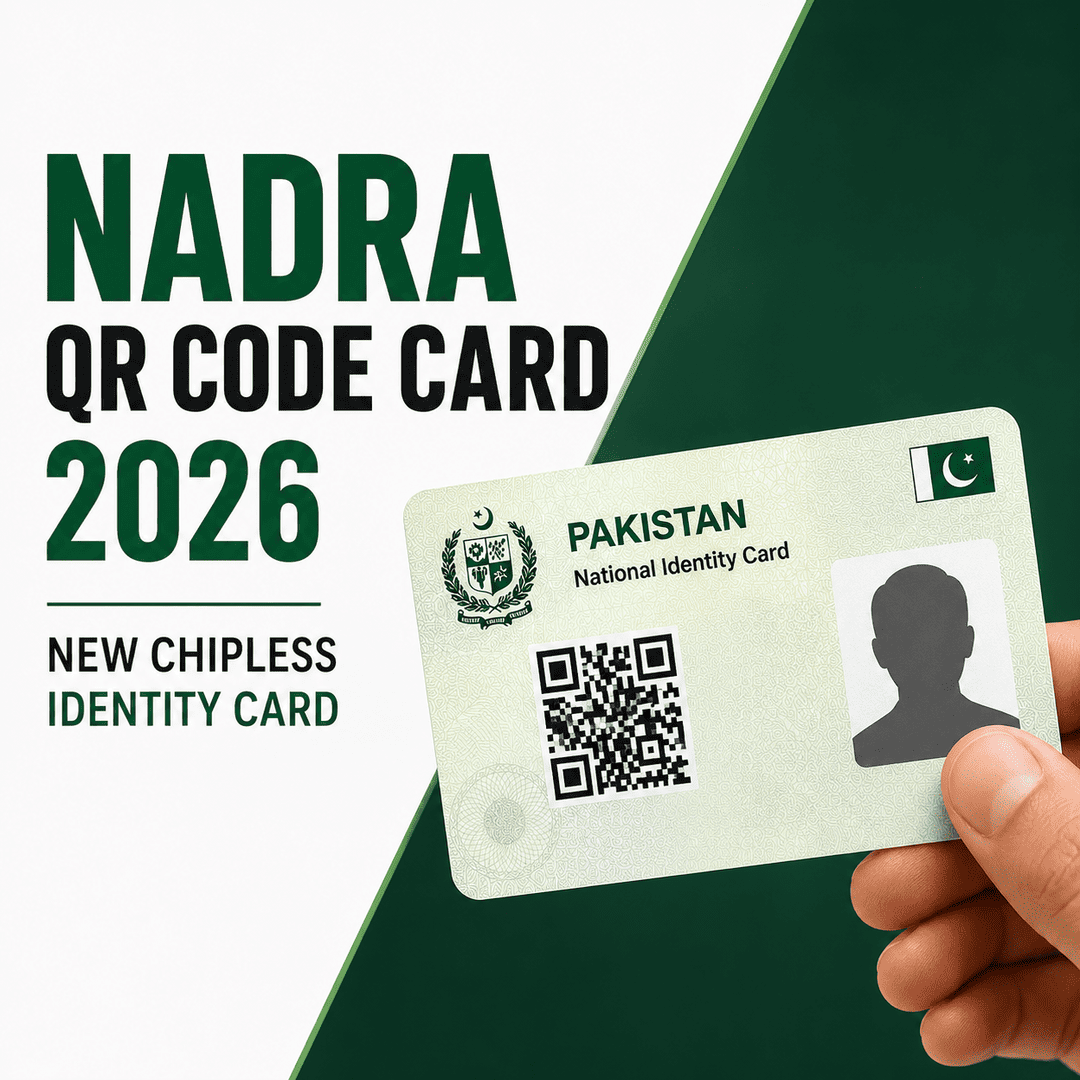
NADRA has introduced a major change to Pakistan’s identity card system with the launch of a new QR code-based National Identity Card.
The new card replaces the imported microchip used in Smart National Identity Cards with a secure QR code that can be verified digitally. The change is particularly important for Pakistanis who want to understand what will happen to existing CNICs, Smart Cards and, eventually, NICOP cards used by overseas Pakistanis.
The new NADRA QR Code Card was introduced on 14 August 2026 as part of a phased rollout. According to NADRA, the new identity card is manufactured in Pakistan and has been designed to make identity verification more accessible while reducing reliance on imported microchips.
For overseas Pakistanis living in the UK, there is an important distinction: the initial rollout applies to standard National Identity Cards. QR code-based NICOP cards are expected to be introduced from January 2027.
Here is what you need to know about the change.
What Is the New NADRA QR Code Card?
The new NADRA card is a chipless identity card that uses a secure, machine-readable QR code instead of the microchip found on Smart National Identity Cards. The QR code can be used for digital identity verification through NADRA’s Pak Identity (PakID) system. Rather than relying on specialised chip-reading equipment, the new system is designed to allow identity information to be verified using more widely available technology, including smartphones and compatible camera-based systems. According to NADRA, the QR code contains relevant cardholder information and the cardholder’s photograph. The physical card also includes updated visible and covert security features.Why Is NADRA Replacing the Microchip?
Smart National Identity Cards containing microchips were introduced approximately 14 years ago. However, NADRA says the chip’s functionality could not be used as widely as originally intended because chip readers and the supporting infrastructure were not sufficiently available. The new QR-based system addresses this problem. Instead of requiring a dedicated chip reader, QR-based verification can be performed through an ordinary smartphone using the PakID application or compatible verification software. This could make identity verification more practical for organisations such as banks, hospitals, telecom operators, police and other authorised institutions. Another important reason for the change is local production. NADRA says the new card is manufactured in Pakistan by the Pakistan Security Printing Corporation, removing dependence on the imported microchip previously used in identity cards.When Was the New NADRA QR Code Card Launched?
NADRA officially introduced the new chipless National Identity Card on 14 August 2026. The Federal Government had approved issuance of the new card on 23 February 2026. Earlier in February, amendments to Pakistan’s identity card rules established a legal framework allowing QR codes or other technological features to be used in place of the existing microchip. The transition is therefore more than simply a redesign of the physical card. It forms part of a broader change in how Pakistani identity documents can be digitally verified.How Does the NADRA QR Code Work?
The new card contains a secure QR code that can be read and verified through NADRA’s digital identity infrastructure. The system is designed to make it easier for authorised organisations to capture and verify identity information digitally. Instead of manually entering details from the card, compatible systems may be able to read information such as the cardholder’s name, address and other required identity information. This can potentially reduce manual data-entry errors while making verification faster and more consistent. NADRA has stated that authorised institutions will be provided with appropriate software for QR-based verification.What Information Will Be Shown on the New NADRA Card?
The new card is not simply an old identity card with a QR code added. NADRA has updated several elements of the card design. The new identity card includes:- A secure QR code
- Cardholder photograph
- Family number
- Name in Urdu and English
- Address in Urdu and English
- Updated visible and covert security features
- Specific identification symbols where applicable
NADRA QR Code Card vs Smart Card
The main difference between the traditional Smart National Identity Card and the new NADRA QR Code Card is the technology used for verification. The Smart Card contains a physical microchip. The new card removes that imported microchip and instead uses a secure QR code. A major practical difference is accessibility. Reading a microchip generally requires compatible chip-reading infrastructure, whereas the new QR system is designed to work with smartphones and suitable camera-based verification systems. This is one of the main reasons NADRA has moved towards QR-based identity verification.Will NICOP Also Get a QR Code?
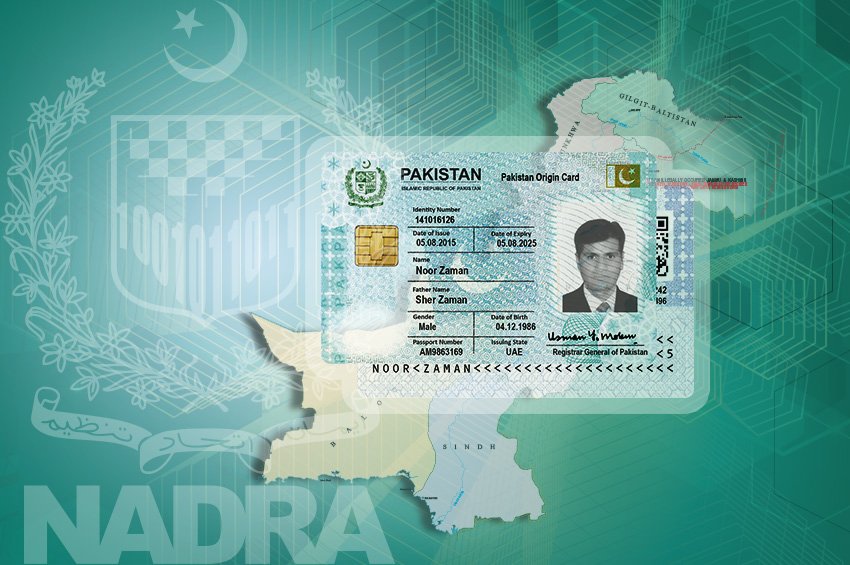
Yes, NADRA has announced plans to extend the chipless QR-based card format to NICOP. However, overseas Pakistanis should pay close attention to the rollout schedule. The first phase, which began on 14 August 2026, applies to the standard National Identity Card. According to NADRA’s announced schedule, NICOP and Juvenile Cards will move to the new format from January 2027. This means Pakistani citizens living in the UK should not assume that every NICOP application submitted immediately after the August 2026 announcement will automatically receive the new QR-based format. If you currently need a new NICOP or need to renew your existing NICOP, you should follow the applicable NADRA application process rather than waiting solely because of the new card announcement.What About the Pakistan Origin Card (POC)?
The Pakistan Origin Card (POC) is also expected to move to the chipless QR code format. However, NADRA has placed POC in a later phase of the transition. The announced rollout is broadly: Phase 1 – August 2026: Standard National Identity Card Phase 2 – From January 2027: NICOP and Juvenile Cards Final Phase: Pakistan Origin Card (POC) Applicants should check current requirements when applying because implementation details can change as the rollout progresses.Is My Existing NADRA Card Still Valid?
Yes. One of the most important points for existing cardholders is that previously issued NADRA identity cards remain valid until their respective expiry dates. The introduction of the QR Code Card does not automatically invalidate your existing CNIC, Smart CNIC or NICOP. Therefore, you should not assume that you need to replace a valid card immediately simply because the new format has been introduced.Do UK Pakistanis Need to Replace Their Existing NICOP?
Not simply because NADRA has announced the QR-based card. If you are living in the UK and already have a valid NICOP, NADRA has stated that previously issued identity cards remain valid until expiry. You would normally deal with your NICOP when you need to:- Renew an expiring or expired NICOP
- Replace a lost card
- Correct or modify personal information
- Apply for a NICOP for the first time
- Complete another applicable NADRA identity service